-
【QIAO FORUM】The Wisdom of Chinese Civilization and the Cultural Mission in the New Era
2026-07-22 10:13:38
Tracing Origins and Seeking the Way
The Wisdom of Chinese Civilization and the Cultural Mission in the New Era
(中華文明智慧與新時代的文化使命)
In the vast cosmos, stars and galaxies revolve; Chinese civilization flows unbroken. Upon this ancient yet ever-renewing land, a unique wisdom, like a spring surging from the depths, has grown ever clearer and more abundant through millennia. This is the traditional Chinese Daoist thought, masterfully represented by Laozi's Dao De Jing. It is not only the philosophical crystallization of ancient Chinese sages gazing at the stars and inquiring into the supreme Way, but has also transformed into a cultural gene, deeply engraved into the nation's spiritual lineage. With its universal radiance, it transcends temporal and spatial barriers, becoming an intellectual peak revered by all humanity. As we stand at the crucial juncture of the great rejuvenation of the Chinese nation, amidst the surging tides of profound global changes unseen in a century, reflecting upon this "King of All Classics," its significance has long surpassed the realm of mere academic study. It concerns the continuity of our civilizational roots, the foundation of cultural confidence, and Eastern answers to the dilemmas of modernity.
I. The King of All Classics: The Philosophical Pinnacle and Eternal Allure of Chinese Wisdom
The enduring continuity of Chinese civilization relies not on geographical isolation but on the profundity of its thought. Among the brilliant constellation of the Hundred Schools of Thought contending during the pre-Qin period, Laozi's Dao De Jing, with its ultimate inquiry into the "mystery beyond mystery, the gateway to all subtleties," erected a philosophical Mount Everest Overlook.the world. Its five thousand characters flow expansively, each word a precious gem, each sentence precise and profound. Through its distinctive poetic language and dialectical thinking, it accomplishes a panoramic insight and systematic construction of the cosmos, nature, society, and human life.
The core of its thought, "Dao" (the Way) and "De" (Virtue/Power), constitutes two keys to understanding the spiritual world of Chinese civilization. "Dao is the hidden essence of all things." It is the ultimate noumenon and operating principle that existed before Heaven and Earth, circulates ceaselessly, and generates and transforms all things. It is "silent and formless, standing alone and unchanging," incapable of being fully defined by words, yet observable through the operations of all phenomena. "De is attainment." It is the manifestation, endowment, and function of Dao within concrete things; it is the inherent nature of all things as they follow Dao. Thus, the Dao De Jing states: "Dao gives them life; De rears them; things give them form; circumstances complete them. Therefore, all things venerate Dao and honor De." This core concept of "venerating Dao and honoring De" laid the foundation for the Chinese civilization's worldview and values of "the unity of Heaven and humanity" and "Dao models itself on nature." It teaches people to revere the laws of nature (the Way of Heaven), uphold inner authenticity (De), and pursue a mode of existence harmonious and symbiotic with all things.
Emperor Taizu of the Ming Dynasty, Zhu Yuanzhang, commissioned the compilation of Annotations on the Dao De Jing, praising it as "the supreme root of all things, the highest teacher for rulers, and the ultimate treasure for officials and the people." This assessment is no exaggeration. As the "supreme root," it reveals the fundamental laws of existence and development. As the "highest teacher," it provides profound wisdom for governance: "governing through non-action," "governing the state with correctness," "taking the heart of the people as one's own heart." As the "ultimate treasure," it offers individuals methods for self-cultivation: "reaching the extreme of emptiness, guarding steadfast tranquility," "knowing contentment avoids disgrace, knowing when to stop avoids danger." It is precisely this quality of connecting Heaven, Earth, and humanity, integrating theory and practice, that makes the Dao De Jing not merely a philosophical text, but a living encyclopedia rich with management thought, ecological wisdom, and philosophy of life. For millennia, it has been annotated, commented upon, and translated generation after generation, with over a thousand versions in more than a hundred languages. Its influence has long transcended national borders, becoming the most distinctively Eastern treasure in the world's philosophical treasury.
II. Integrating Ancient and Modern: The Creative Transformation and Contemporary Rebirth of Traditional Wisdom
Truly great thought is never confined to the dust of history; it can be continuously activated and reinterpreted amidst the tides of the times, radiating new vitality. Laozi's thought is undergoing a profound process of creative transformation and innovative development within contemporary China's evolution and practice. This is not simple retroism, but a distillation and sublimation, under the guidance of the basic tenets of Marxism, that modernizes and popularizes the essence of tradition, resonating with the needs of modern society.
China's proposition of the concept of a "Community with a Shared Future for Mankind" is a paradigm of this integration of ancient and modern. Within the cultural depths of this grand vision that transcends nation-state boundaries flows the ancient wisdom of Chinese "harmony and integration culture." The generative philosophy in the Dao De Jing – "Dao begets the One; the One begets the Two; the Two beget the Three; the Three beget all things" – emphasizes the common origin and harmonious coexistence of all things. Its diplomatic wisdom – "Repay injury with kindness," "A great state is like the low-lying land toward which all streams flow" – advocates humility, inclusiveness, and win-win cooperation. Tempered by the spirit of the times, these ideas are forged into the common values of all humanity: "peace, development, fairness, justice, democracy, and freedom," contributing Chinese solutions and wisdom that transcend zero-sum games in addressing global challenges.
At the level of national governance, the ecological view of "Dao models itself on nature" has been deeply embedded in the ecological civilization concept that "lucid waters and lush mountains are invaluable assets." The prudent governance thought of "governing a large state is like cooking a small fish" aligns with the strategy of "maintaining a steady pace while making swift progress" and "implementing targeted policies" emphasized in comprehensively deepening reforms. The people-oriented tenet of "taking the heart of the people as one's own heart" is thoroughly practiced and amplified in the people-centered development philosophy. The twenty-four characters advocated by the Core Socialist Values, their inherent harmony, unity, and moral pursuit, can also be seen as a contemporary condensation and popular expression of the traditional thought of "venerating Dao and honoring De" at the level of social ethics. From the national goals of "prosperity, democracy, civility, and harmony," to the social vision of "freedom, equality, justice, and the rule of law," and down to the personal standards of "patriotism, dedication, integrity, and friendship," all embody the pursuit of an orderly, harmonious, and morally good social order. This is precisely the modern expression and practice of the logic of moral extension advocated by Laozi: "Cultivate it in your person, and its De will be genuine. Cultivate it in your family, and its De will be abundant. Cultivate it in your community, and its De will be enduring. Cultivate it in your state, and its De will be flourishing. Cultivate it throughout the world, and its De will be universal."
III. The Mission of Our Time: Cultural Confidence, Strength, and the Spiritual Support for National Rejuvenation
Today's world is undergoing profound and sweeping transformations. On one hand, a new round of technological revolution and industrial transformation is reshaping the global landscape, with information technology developing rapidly, and cultural exchange and collision more direct and frequent than ever before. On the other hand, unilateralism and protectionism are rising, theories of civilizational conflict are resurfacing, global challenges are boundless,, and the world has entered a new period of turbulence and transformation. Simultaneously, the process of the great rejuvenation of the Chinese nation is irreversible; we are closer than any time in history to achieving this goal, and we have greater confidence and capability.
At this historical intersection of "great transformation" and "great rejuvenation," the role of culture has been elevated to a strategic height crucial to the rise and fall of national fortunes. The "Decision of the Central Committee of the Communist Party of China on Further Comprehensively Deepening Reforms and Advancing Chinese Modernization," adopted at the Third Plenary Session of the 20th CPC Central Committee, clearly states that Chinese modernization is modernization featuring harmony between material and spiritual civilization. This means our path to modernization rejects material expand at the cost of spiritual nihilism and moral decline, pursuing instead the all-round development of individuals and the comprehensive progress of society. High-quality development requires not only a solid material and technological foundation but also strong spiritual support and cultural guidance.
Therefore, enhancing cultural confidence, developing socialist advanced culture, promoting revolutionary culture, and inheriting fine traditional Chinese culture have become powerful themes of our era. Conducting in-depth research and dissemination of fine traditional Chinese culture, represented by the Dao De Jing, is thus endowed with multiple urgent and profound strategic significances:
- It is an essential requirement for shouldering the new cultural mission of the new era. The new cultural mission demands that we create a new culture belonging to our time and build a modern civilization for the Chinese nation. This is inseparable from deep excavation into the "fundamental roots" of Chinese civilization. Understanding the ceaseless vitality of "Dao" allows us to comprehend how Chinese civilization, though ancient, can continuously renew its mandate. Grasping the dialectical law that "reversal is the movement of Dao" enables a profound understanding of the historical inevitability and philosophical basis for reform and innovation.
- It meets the intrinsic needs of enriching people's spiritual and cultural lives. As material life becomes increasingly abundant, people's demand for spiritual and cultural life presents characteristics of diversification and high quality. The wisdom in the Dao De Jing concerning the meaning of life, philosophy of conduct, and tranquility of mind can provide precious Eastern resources for individuals seeking spiritual anchorage in the fast-paced, high-pressure modern life, contributing to the construction of a positive, healthy, harmonious, and benevolent social mentality.
- It is an urgent need to adapt to the new situation of rapid information technology development. Digital technology has completely transformed the form of cultural production and dissemination. How to use new media and technologies to make ancient classics "come alive" and become "trendy," transmitting their core wisdom in ways that resonate with young people, is a question of the times that must be answered. This requires the research itself to be open and innovative.
4. It is a demand of the times to enhance national cultural soft power and the global influence of Chinese culture. Competition among major nations is not only about economic and technological strength but also about cultural ideas and values. The Dao De Jing, as a cultural symbol with global influence, serves as an excellent medium for China' sculture dialogue with other countries and for promoting mutual understanding among peoples. Telling the story of Laozi well and interpreting the universal wisdom it contains are effective ways to present a credible, appealing, and respectable image of China and to promote the establishment of a more just and reasonable new international cultural order.
IV. Conclusion: Civilizational Dialogue Toward the Future
Surveying the Dao De Jing, its ideas are like a resplendent Milky Way, vast and profound. Its eighty-one chapters are like stars, each shimmering with insightful light from different angles. At times, it is as enigmatic as "The Dao that can be spoken is not the eternal Dao," sparking infinite contemplation on the origin of the cosmos. At times, it is as concrete as "Governing a large state is like cooking a small fish," offering practical governance wisdom. At times, it is as gentle as "The highest good is like water," guiding toward the supreme realm of personal cultivation. This classic is like an inexhaustible spring of wisdom; drawing from it across generations, all gain something.
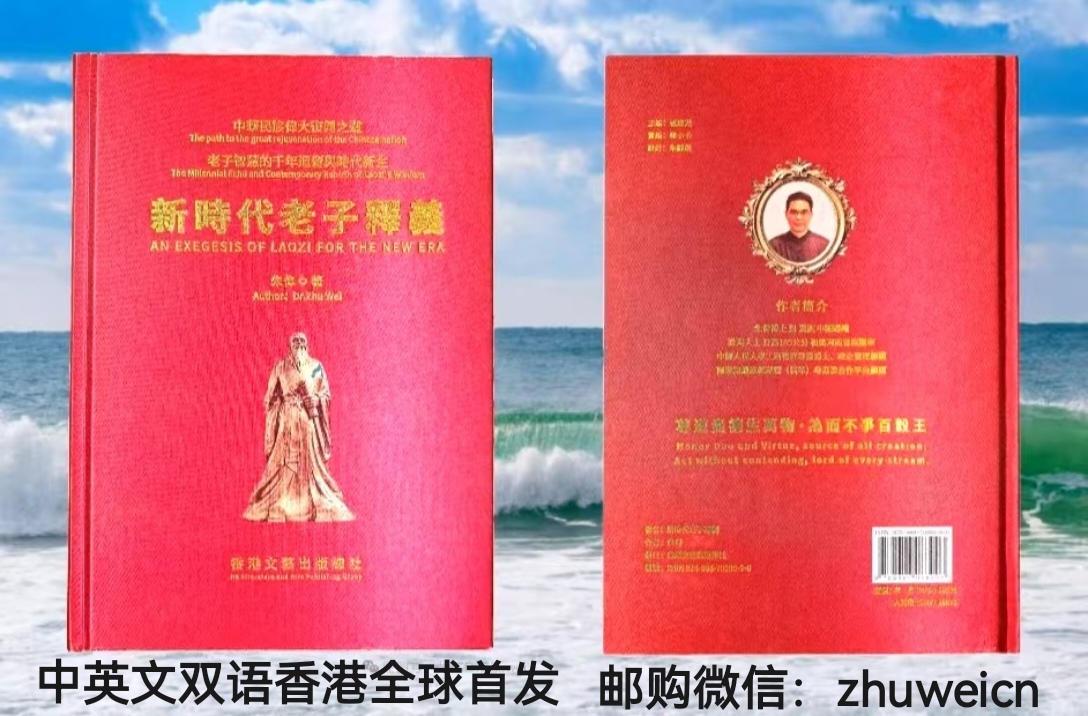
The compilation of this book is precisely based on the profound historical understanding and urgent sense of mission of our time described above. It attempts to traverse the mists of a thousand years, returning to that Axial Age of intellectual ferment to inquire into the origins of Laozi's philosophy. Simultaneously, it is firmly grounded in the magnificent practice of contemporary China, exploring the deep dialogue and symbiotic fuse between ancient wisdom and the modernization process. It is believed that in-depth exploration and contemporary interpretation of Dao De Jing culture is not only a deep retrospect to our national roots, but also provides a source of intellectual resources and spiritual fortitude drawn from ancient Eastern wisdom as we face the future, meet challenges, and shape new forms of civilization.
On the grand journey of realizing the great rejuvenation of the Chinese nation, and in the great practice of promoting the building of a Community with a Shared Future for Mankind, allowing this classic of Eastern wisdom that has traversed 2,500 years to once again radiate its light that transcends time and enlightens the future is the inescapable cultural responsibility and historical honor of our generation. Let us embark together on this dialogue with the ancient sages, with our times, and with the future, to draw strength and clarify our direction.
Author : Dr. Zhu Wei
AN EXEGESIS OF LAOZI FOR THE NEW ERA ——《新時代老子釋義》